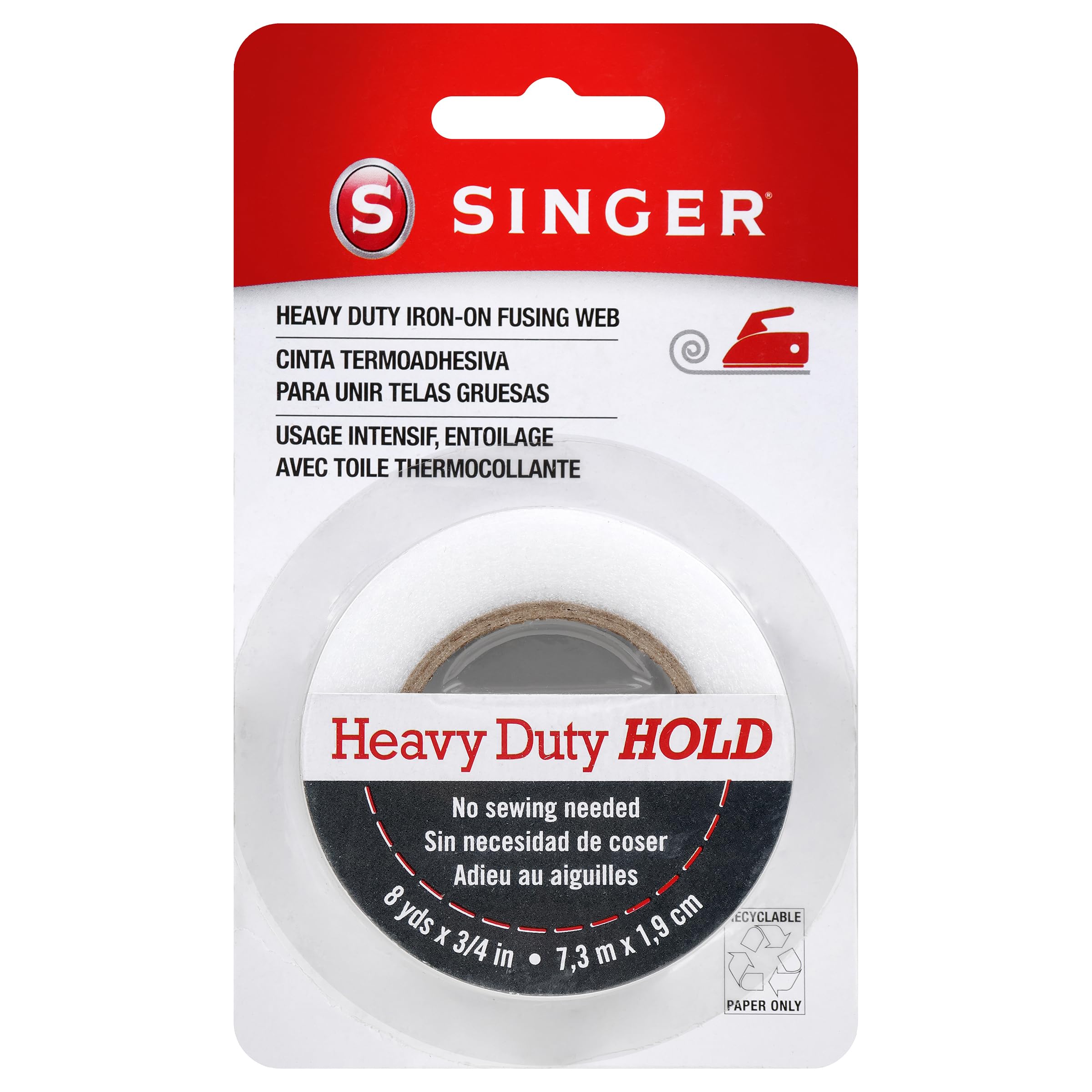
The SINGER Heavy Duty Iron-On Fusing Web is a narrow, iron-on adhesive strip for joining fabric, securing hems, and mending tears.
In this SINGER Heavy Duty Iron-On Fusing Web review, we look at where an 8-yard roll may simplify repairs and where a sewn finish may still suit the job better.
SINGER Fusing Web Review Summary
The quick verdict
4,000+ ratings
Read Amazon ReviewsSINGER Heavy Duty Iron-On Fusing Web
A practical choice for quick hems, fabric repairs, and crafts when you want to bond fabric without sewing.
- Iron-on fabric adhesive web for fusing two pieces of fabric together without sewing.
- Roll measures ¾ inch wide by 8 yards long.
- Intended for securing hems and facings, mending tears, and supporting arts and crafts projects.
- Described for a range of fabric weights, including lightweight materials, denim, corduroy, and twill.

Pros
- Offers a no-sew option for simple fabric joins and alterations.
- The 8-yard roll can supply material for multiple small projects.
Consider before buying
- The ¾-inch width is more naturally suited to narrow hems and repair areas than broad surfaces.
- An iron-on bond may not be the right finish for every fabric, garment, or project; check the care and application guidance for your materials.
Read the full review summary
This fusing web is designed for straightforward fabric projects where a no-sew bond is useful. Its ¾-inch width can suit hems, facings, small tears, and craft work, while the 8-yard roll gives you material for multiple tasks.
It is also described for use with fabrics ranging from lightweight materials to denim, corduroy, and twill.
The main appeal is convenience: the adhesive is applied with an iron to join two pieces of fabric, avoiding the need for stitching on projects that suit this method.
It may be a good fit for quick alterations and mending at home, especially when you want to reduce sewing work.
Since fabric construction and project demands vary, check the specific instructions and test on a discreet area before committing to a visible or hard-wearing repair.
The buying factors
SINGER Fusing Web Scorecard
Editorial scores reflect listed features and buyer fit; they are not laboratory measurements or customer ratings.
Everyday repair usefulness
Its intended uses include mending tears and helping prevent fraying, which cover common garment and craft fixes.
Project versatility
The described applications include hems, facings, repairs, and crafts across a range of fabric weights.
No-sew convenience
The iron-on strip is designed to bond two fabric pieces without stitching, reducing steps for suitable projects.
Roll quantity
The 8-yard length can support multiple repairs, although the ¾-inch width is best suited to narrower bonding areas.
Heavy-fabric suitability
Denim, corduroy, and twill are named uses, but results depend on the particular fabric and application.
Project precision
A narrow strip can work well for hems and small repairs; broader or irregular areas may take more planning.
Key Features and Specifications of SINGER Fusing Web
- Iron-on fabric adhesive web for fusing two pieces of fabric together without sewing.
- Roll measures ¾ inch wide by 8 yards long.
- Intended for securing hems and facings, mending tears, and supporting arts and crafts projects.
- Described for a range of fabric weights, including lightweight materials, denim, corduroy, and twill.
- Designed to help repair tears and prevent fabric from fraying.
Pros and Cons of SINGER Fusing Web
Pros
- Offers a no-sew option for simple fabric joins and alterations.
- The 8-yard roll can supply material for multiple small projects.
- Useful applications span hemming, facings, tear repair, and crafts.
- Its listed fabric range includes both lightweight materials and heavier examples such as denim.
Consider before buying
- The ¾-inch width is more naturally suited to narrow hems and repair areas than broad surfaces.
- An iron-on bond may not be the right finish for every fabric, garment, or project; check the care and application guidance for your materials.
- The description does not give project-specific application settings, so buyers should follow the package instructions and test first where appearance matters.
Who Should Buy SINGER Fusing Web?
Good fit
Consider this fusing web if you regularly handle straightforward hems, facings, small tears, or fabric crafts and want a way to join material without stitching.
The narrow roll format is practical when the work follows an edge or a limited repair area, and its length gives you material for more than a single fix.
It may also suit someone who sews but wants an adhesive option for selected tasks. Before using it on a favorite garment, check the fabric's care requirements and the product's instructions, then try a discreet test piece.
That gives you a chance to judge the finish and bond for your specific material.
Who should skip it
Skip it if your project depends on a stitched seam or another construction method rather than an iron-on adhesive bond. Fusing web is best considered for appropriate repairs and finishing tasks, not as a universal replacement for sewing.
Look for a different format if your work needs adhesive across a wide area; this roll is ¾ inch wide, so a narrow strip may require repeated placement for broader projects.
How SINGER Fusing Web Fits Common Fabric Repairs
A focused format for hems and small repairs
At ¾ inch wide, the web is sized as a strip rather than a broad sheet. That format aligns with edge work such as hems and facings, as well as localized repairs.
For wider areas, consider whether several parallel strips would be practical before starting.
Fabric range calls for project judgment
The product is described for lightweight materials as well as denim, corduroy, and twill.
That range makes it relevant to varied clothing and craft tasks, but it does not guarantee the same result on every weave, finish, or garment.
A discreet test and the package directions can help determine whether the bond suits the fabric.
Convenience comes with a different construction method
Iron-on web is intended to fuse two pieces of fabric without sewing, which can save stitching steps on compatible projects.
The tradeoff is that buyers need to decide whether an adhesive join fits the garment's use and desired finish. Keep sewing available for projects where stitching is part of the required construction.
Plan the roll around the job
Eight yards provides material for multiple repairs, but the amount used depends on the length of each hem or bond.
For a single project, estimate the edges and repair areas first; for recurring mending, the roll format can be convenient to keep with other sewing supplies.
Alternatives to SINGER Fusing Web
No alternative model is recommended here. Compare the design and features that matter to your routine before choosing another option.
Is SINGER Fusing Web Worth It?
The SINGER Heavy Duty Iron-On Fusing Web is worth considering for simple hems, facings, small fabric repairs, and crafts where an iron-on adhesive join fits the job.
Its ¾-inch-by-8-yard roll offers a useful format for repeat work, and the described fabric range is broad enough to make it relevant to several common projects.
Treat it as a task-specific sewing aid rather than a universal substitute for stitches. Check the instructions and test on your material first, especially when the repair is visible or the garment has particular care needs.
Your review at a glance
4,000+ ratings
Read Amazon ReviewsSINGER Heavy Duty Iron-On Fusing Web
A practical choice for quick hems, fabric repairs, and crafts when you want to bond fabric without sewing.
- Iron-on fabric adhesive web for fusing two pieces of fabric together without sewing.
- Roll measures ¾ inch wide by 8 yards long.
- Intended for securing hems and facings, mending tears, and supporting arts and crafts projects.
- Described for a range of fabric weights, including lightweight materials, denim, corduroy, and twill.